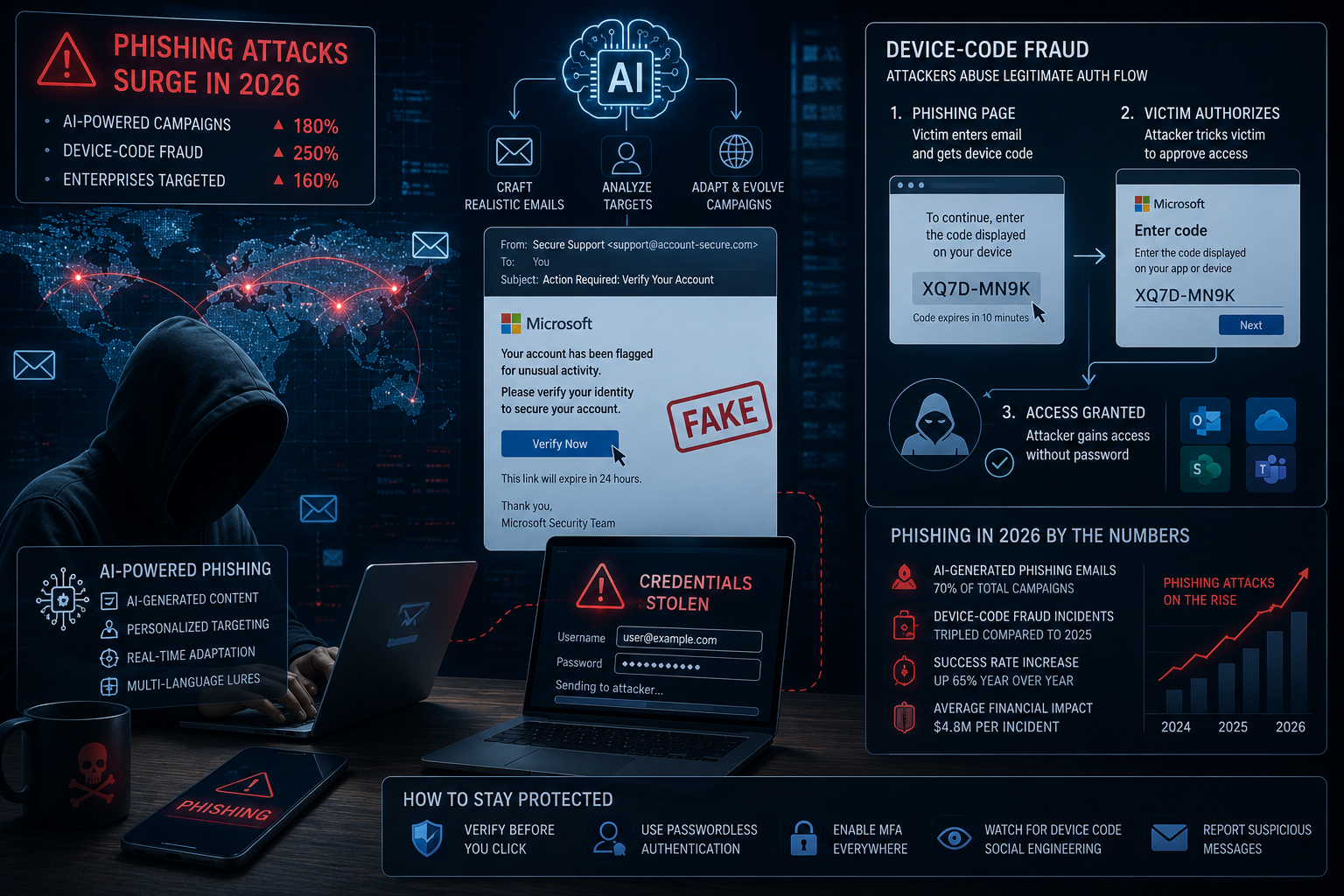
Modern phishing campaigns have evolved far beyond fake websites hosted on suspicious domains. Today's threat actors increasingly abuse legitimate domains to make malicious emails appear trustworthy, evade traditional security controls, and improve the likelihood of user interaction. By exploiting the reputation of established organizations, cloud platforms, and compromised business websites, attackers significantly increase the effectiveness of credential theft and initial access operations.
Recent phishing attack news reports indicate that domain reputation has become a valuable asset for cybercriminals. Rather than investing in new malicious infrastructure that is quickly detected and blocked, attackers now leverage trusted domains to blend into legitimate internet traffic. Combined with the growing number of cybersecurity alerts regarding cloud service abuse and compromised websites, this trend presents a serious challenge for enterprise security teams.
Why Legitimate Domains Have Become Valuable Attack Infrastructure
Traditional phishing campaigns relied on domains intentionally created to imitate banks, technology companies, or online services. While these attacks continue, email security gateways and domain reputation systems have become more effective at identifying newly registered malicious websites.
To overcome these defenses, attackers increasingly exploit:
Compromised corporate websites
Trusted cloud storage platforms
Business collaboration services
Marketing automation platforms
Online document-sharing applications
Content delivery networks
URL redirection services
Emails containing links from these legitimate domains are often perceived as less suspicious by both users and automated security systems.
Many incidents highlighted in security breach news investigations demonstrate that attackers can successfully bypass conventional filtering by embedding malicious content within reputable online services instead of directing victims to obviously fraudulent websites.
Techniques Used to Abuse Trusted Domains
Threat intelligence teams continue to identify increasingly sophisticated methods for exploiting legitimate online infrastructure.
Compromised Business Websites
Attackers inject malicious scripts or host phishing pages within vulnerable corporate websites, taking advantage of their established reputation.
Cloud Storage Abuse
Threat actors upload malicious documents, credential-harvesting pages, or malware to trusted cloud storage services and distribute legitimate-looking sharing links.
Open Redirect Exploitation
Misconfigured redirect functions on legitimate websites can forward users to malicious destinations while preserving trust in the original domain.
URL Shortening Services
Shortened URLs conceal the final destination, making phishing links more difficult for users to evaluate before clicking.
Compromised Email Accounts
Previously compromised business accounts are frequently used to distribute phishing emails from trusted domains, increasing campaign credibility.
These techniques continue to appear in phishing attack news because they exploit user trust rather than relying solely on technical vulnerabilities.
Enterprise Security Risks
The abuse of legitimate domains complicates detection and increases the probability of successful phishing campaigns. Since many trusted services are essential for daily business operations, organizations cannot simply block them without affecting productivity.
Potential consequences include:
Credential theft
Business email compromise
Cloud account takeover
Financial fraud
Data exfiltration
Ransomware deployment
Supply chain compromise
Regulatory compliance issues
A successful phishing campaign often provides attackers with an initial foothold that enables broader intrusion activities. Once authenticated, adversaries may escalate privileges, move laterally across the network, and access sensitive business resources.
Recent security breach news reports show that many significant cyber incidents began with employees interacting with links hosted on trusted or previously compromised domains.
Threat Intelligence Insights and Detection Strategies
Threat intelligence indicates that legitimate domain abuse is becoming a preferred tactic because it blends malicious activity with normal business traffic.
Organizations should monitor for indicators such as:
Unexpected file-sharing notifications
Suspicious OAuth consent requests
Abnormal email forwarding rules
Newly created redirect links
Unusual login activity
Unexpected document access requests
Authentication attempts from unfamiliar locations
Effective defensive measures include:
Advanced Email Analysis
Security platforms should inspect URLs based on behavior rather than domain reputation alone.
Continuous Identity Monitoring
Monitoring authentication activity helps detect compromised accounts before attackers expand access.
URL Sandboxing
Opening suspicious links in isolated environments enables organizations to identify malicious behavior before users are exposed.
Threat Intelligence Integration
Combining external intelligence with internal telemetry allows security teams to identify newly emerging phishing techniques more quickly.
Many recent cybersecurity alerts emphasize that behavioral analysis is becoming more effective than relying exclusively on static reputation-based detection.
Strengthening Enterprise Defenses Against Modern Phishing Campaigns
The increasing abuse of legitimate domains demonstrates that phishing is becoming more sophisticated and more difficult to detect. Security strategies must therefore focus on user behavior, identity protection, and continuous monitoring rather than domain reputation alone.
Organizations can reduce risk by:
Implementing phishing-resistant authentication methods
Enforcing multi-factor authentication
Monitoring cloud application activity
Restricting unnecessary OAuth permissions
Conducting regular phishing simulation exercises
Inspecting URLs dynamically before delivery
Strengthening user awareness programs
Integrating threat intelligence into security operations
Maintaining comprehensive incident response procedures
The latest phishing attack news illustrates that attackers are adapting quickly to improvements in email security by weaponizing trusted online infrastructure. As reflected in ongoing cybersecurity alerts and security breach news, enterprises that adopt identity-centric security, advanced email protection, and continuous threat monitoring will be better positioned to detect and prevent phishing campaigns that exploit legitimate domains.